


Key Information from Our 2026 AGM

We thought that it might be useful to share some of the key slides and notes from the presentation at our AGM, held at the Centre on 28 May 2026
WOEMSTC – The West of England MS Therapy Centre
BTC - Bristol Therapy Centre Limited

Membership Numbers:
WOEMSTC:
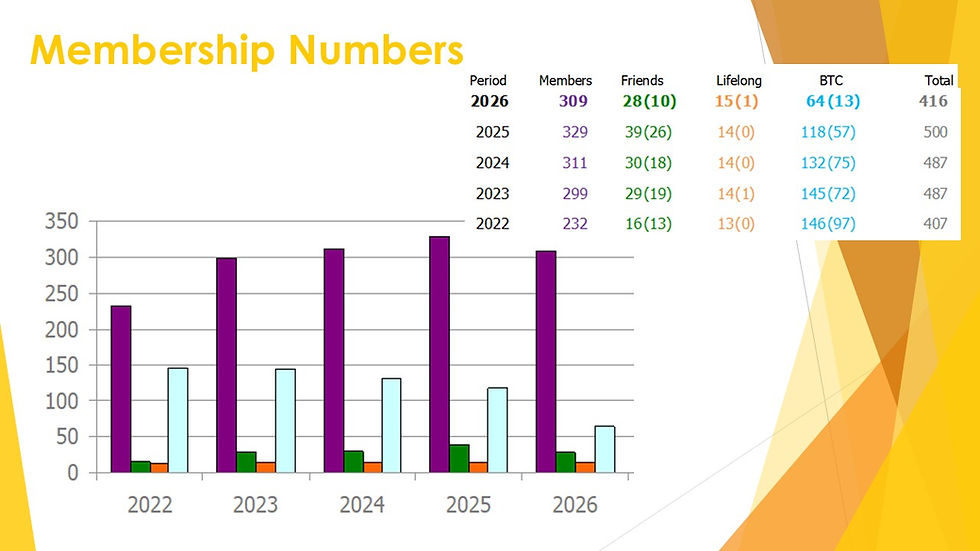
• Over 2025 we had 329 active members, a new high watermark, up from 311 in 2024 and 299 in 2023.
• We closed February 2026 with snapshot at 280 active members and have picked up 49 new members over the last 3 months.
• Total membership, including BTC reached 500 in 2025, the highest recorded across all years shown (2021-2026).
• The 2026 snapshot shows a total of 416 user subscriptions and trading arm registrations to date, and we expect that these will continue to grow throughout the year to surpass the 500 levels at the end of 2025 (At this point last year we had 351 subscribers to our therapies).
BTC:
• There was a drop in BTC registrations through 2025 on the previous year, (57 active registrations in 2025, down from 75 in 2024), though active participation remains broadly consistent.
• The downward trend in total BTC numbers that began in 2025 has continued into 2026 - currently, we have 13 active registrations through the trading company. We put our costs up temporarily in May last year and although these were reviewed again in July and decreased they are still higher than they were in 2024 with no incentives for block bookings. We will be reviewing BTC engagement strategies and contribution levels further.
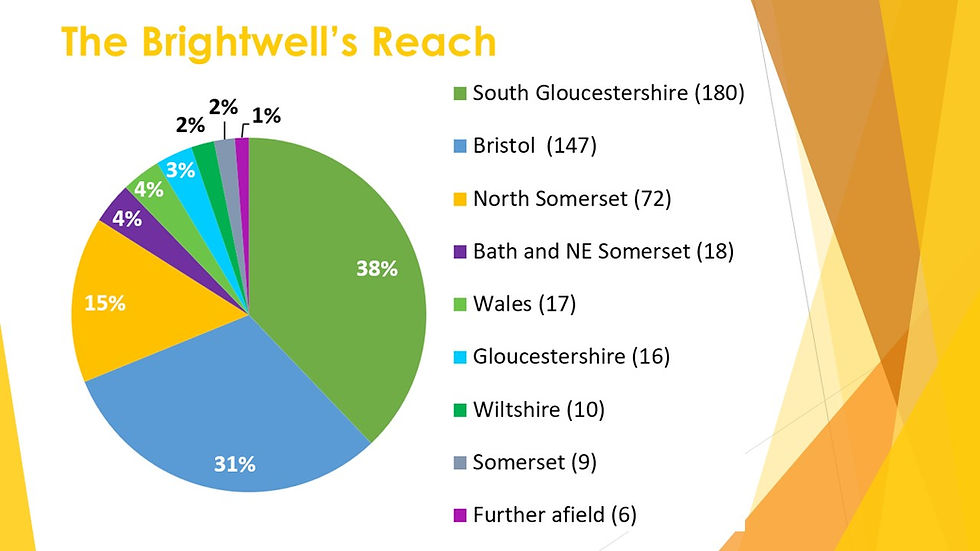
o For the first time, South Gloucestershire overtook Bristol in 2025 as the single largest source of service users (180 vs 147). In 2024, Bristol was just top (155) with South Glos close behind (154), the shift was anticipated and has now materialised.
o North Somerset is stable at 72 (vs 73 in 2024), effectively no change.
o Bath and NE Somerset grew slightly to 18 (up from 17 in 2024).
o Wales dipped slightly to 17 (down from 25 in 2024), we are monitoring this as it could reflect transport or referral pathway changes.
o Gloucestershire grew to 16 (up from 13 in 2024), and Wiltshire appears as a named category for the first time with 10 individuals, again we believe this reflects improved awareness of the Brightwell and our services and potentially a lack of services in those areas.
o The 'further afield' group includes Bedfordshire, Hampshire, Herefordshire, Shropshire, Devon.
o Overall, the geographical spread has broadened very slightly; the Centre is reaching into more named counties than in 2024.
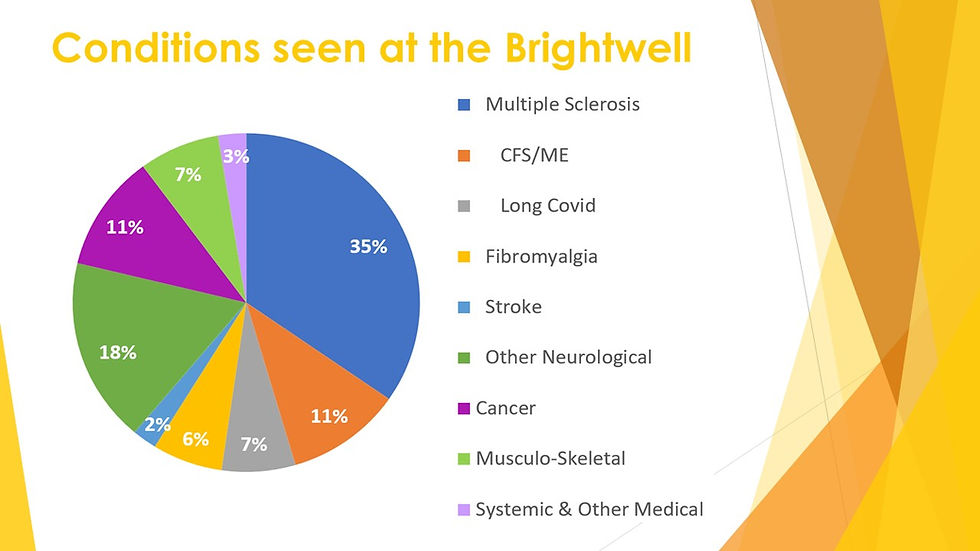
• MS remains the single largest condition group at 35%, which is unchanged from 2024. With 157 people, indicating a stable MS community at the Centre.
• The number of people with Fatigue/CFS/ME has grown in 2025, and I felt it was worth splitting these so that we can better compare this group alongside the other conditions we see. (It accounts for 9% of the centre-wide caseload). This reflects the continued post-pandemic impact.
• Long Covid, while still significant, appears to be slowly consolidating, if grouped with CFS/ME into a broader Chronic Fatigue & Post-Viral category there would be 65 individuals in total.
• The number of people with Stroke we saw in 2025 also increased to 18, which suggests growing clinical focus and volume and adds validity to going out to give talks to groups like Bristol After Stroke, amongst others.
• Cancer numbers are stable at around 33. Breast and prostate cancer remain the largest sub-groups that come for therapy.
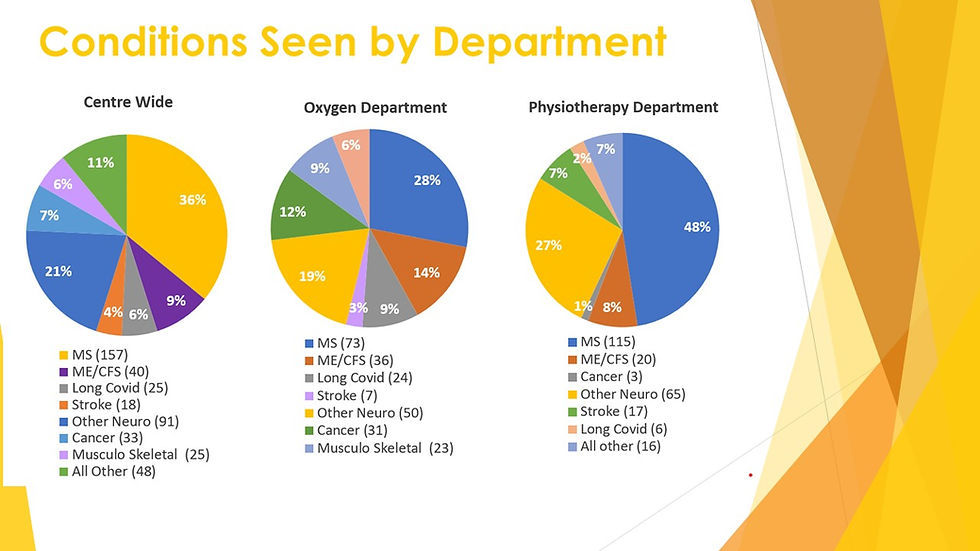
Oxygen
• MS remains the largest single group at 28%.
• ME/CFS is now tracked separately in the Oxygen dept at 36 individuals (14%) a significant category.
• Long Covid in oxygen reduced to 24 (down from 45 in 2024), reflecting a gradual normalisation of post-pandemic demand. These patients may now be classified under ME/CFS.
• Other neuro remained high at 50, showing the breadth of neurological conditions we support across departments.
• Musculoskeletal (23) and Cancer (31) both held steady in the Oxygen dept.
Physiotherapy
• MS accounts for 48% in the physio department, and is still the dominant group.
• Other Neuro grew significantly: to 27%, the Physio team continues to see an extraordinarily diverse neurological caseload. - again reflecting their evolving clinical scope.
• Overall neurological conditions still account for around 90%+ of physiotherapy attendees, underlining our unrivaled specialism in neuro-physiotherapy.
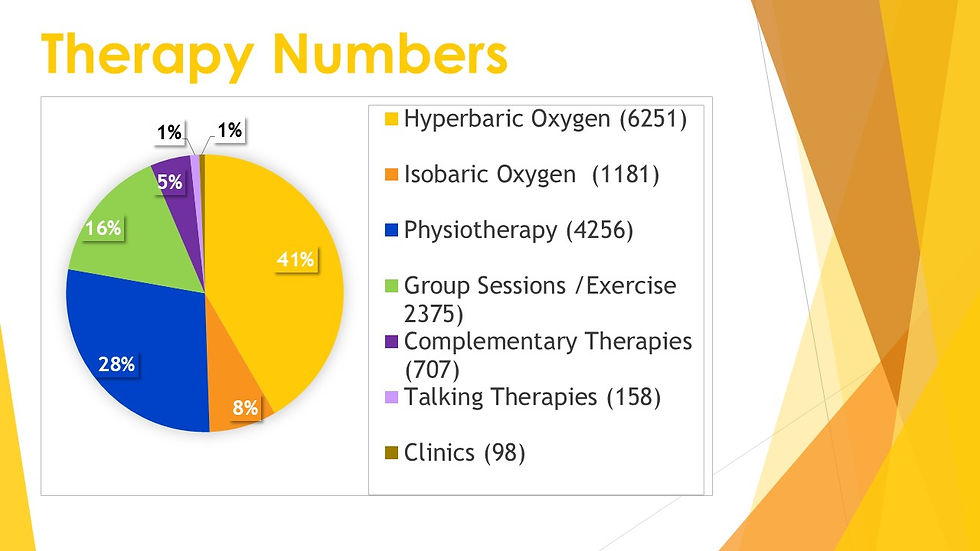
• Total therapy sessions in 2025 continued to grow across almost every modality, this is a strong performance following the record-setting numbers in 2024.
• Hyperbaric Oxygen went up very slightly to 6,251 sessions in 2025.
• Isobaric Oxygen grew from 935 (2024) to 1,181 (2025), a 26% increase. The 2024 introduction of dedicated isobaric induction sessions has clearly embedded well and is driving growth.
• Physiotherapy sessions grew by 100 to 4,256, a continued upward trajectory from 2,771 sessions in 2022.
• Group/Exercise sessions grew by 148 sessions to 2,375, another year of steady growth, reflecting the expansion of tailored classes.
• Complementary Therapies saw a 46% increase. This is a very positive sign of growing demand for holistic support.
• Talking Therapies dipped slightly, but still a strong result given the service was only established in 2023 with 1 person delivering the sessions. The service appears to be settling into a sustainable level of provision.
To download all 24 slides, including the Financial data from our Treasurer, please click below.
If you have any questions about any of this information, please call us on 01454 201686 or email hello@thebrightwell.org.uk



Comments